- Cryptocurrency
- By Gideon
Inflation continues to pressure household spending in Nigeria. Bank transfers sometimes fail at critical moments. Many freelancers and traders now hold value in USDT or Bitcoin rather than keeping large naira balances. Yet electricity providers, cable services, telecom operators, and betting platforms still settle strictly in naira.
This tension has created a clear demand: how to pay bills with crypto in Nigeria without moving funds through unnecessary exchange cycles.
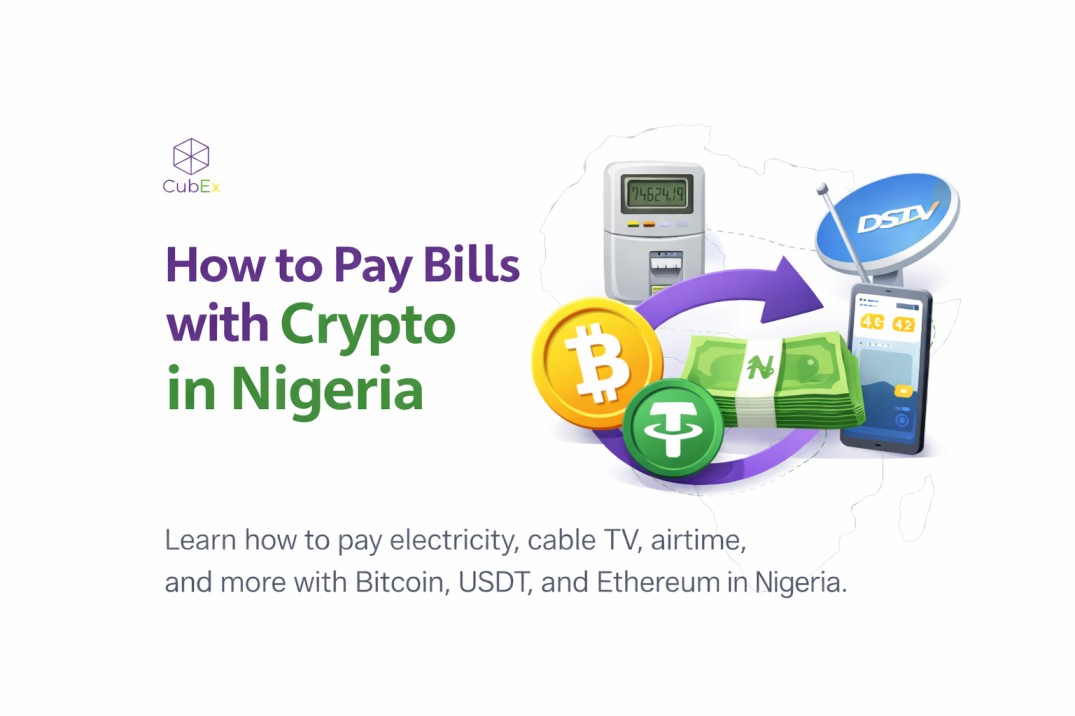
Crypto bill payment in Nigeria now operates through structured fintech platforms that convert digital assets into naira internally and settle through integrated payment rails. What once required multiple steps across exchanges and bank transfers can now be completed within a single platform interface.
Related:Top 3 Bill Payment Apps in Nigeria
How to Convert Bitcoin to Naira in Nigeria
Key Takeaways
- You can pay electricity, DSTV, airtime, data, betting accounts, and internet subscriptions with crypto in Nigeria through licensed fintech platforms.
- Digital assets are converted to naira instantly before settlement.
- USDT (especially TRC20) remains the most cost-efficient asset for routine bill payments.
- Total processing time depends largely on blockchain confirmation speed.
- Crypto usage for bill payments is lawful when conducted through compliant platforms operating under Nigerian financial oversight.
- Conversion spreads and network fees represent the primary cost components.
Can You Pay Bills with Crypto in Nigeria?
Yes, paying bills with crypto in Nigeria is fully possible but it works differently from sending money directly in fiat. Digital assets cannot be sent straight to service providers such as electricity companies or cable operators. Instead, specialized crypto-enabled platforms handle the conversion and settlement process, ensuring the bills are paid in naira while you fund them with crypto.
Here’s how it works:
- Deposit Your Crypto
Transfer your digital assets (Bitcoin, USDT, Ethereum, TRON) from your wallet or exchange to a crypto-enabled fintech platform. - Internal Conversion to Naira
The platform converts your crypto into naira at the prevailing rate. This ensures the payment can be accepted by Nigerian service providers who only process fiat. - Bill Selection and Payment
Once converted, you choose the type of bill you want to pay e.g electricity, DSTV, GOtv, airtime, data, or internet subscription and enter the required details (meter number, smart card ID, or account info). - Instant Settlement
The platform completes the payment directly with the service provider. You receive confirmation or a receipt immediately, depending on the bill type. - Supported Cryptocurrencies
Most platforms accept multiple digital assets for convenience:- Bitcoin (BTC) – widely held and recognized
- USDT – stable and ideal for predictable bill amounts
- Ethereum (ETH) – commonly supported with slightly higher fees
- TRON (TRX) – low network fees and fast confirmation
- Bitcoin (BTC) – widely held and recognized
- Crypto as the Funding Layer
The digital asset itself does not reach the biller. Instead, it acts as the source of funds, which the platform converts and settles in naira on your behalf.
By using this structure, Nigerians can leverage their crypto holdings to cover recurring obligations, manage currency fluctuations, and maintain liquidity without depending entirely on traditional bank transfers.
Related:How to Convert Bitcoin to Naira in Nigeria
How to Pay Bills with Crypto in Nigeria on Cubex
Step 1: Create or Log in to Your Cubex Account
Before paying bills, you need a verified account. Key preparations include:
- Complete identity verification – Submit your ID and KYC details to comply with regulatory requirements.
- Enable two-factor authentication (2FA) – Adds an extra security layer for all transactions.
- Check live rates – Cubex displays current crypto-to-naira rates so you know exactly how much will be credited for your bill payment.
Step 2: Fund Your Wallet
Deposit crypto into your Cubex wallet from another exchange or personal wallet. Timing varies by cryptocurrency:
- USDT (TRC20): 1–3 minutes
- Bitcoin (BTC): 10–30 minutes, depending on network congestion
- Ethereum (ETH): 2–10 minutes
Always ensure you send each crypto to the correct network. Sending USDT on the wrong blockchain can result in permanent loss of funds.
Step 3: Convert Crypto to Naira
Once your deposit confirms:
- Review the exchange rate – Cubex shows the exact naira equivalent of your crypto.
- Check the conversion value – Confirm that the amount covers your intended bill.
- Note any spread or fee – The conversion may include a small operational margin.
Conversion occurs immediately once approved, so you can proceed to payment without waiting.
Step 4: Select Your Bill Category
Cubex supports multiple bill types. After conversion, choose the category and enter the required details:
- Electricity (PHCN / DisCos) – Provide meter number and amount.
- Cable TV (DSTV, GOtv, Startimes) – Input your smart card number.
- Airtime & Data – Select your mobile network and amount.
- Betting Accounts – Deposit funds into your betting wallets.
- Internet Subscriptions – Renew subscriptions for services like ISPs.
Each category integrates directly with the service provider, ensuring instant settlement once payment is processed.
Step 5: Confirm Payment & Receive Receipt
After selecting the bill and entering details:
- Electricity: Prepaid token is generated immediately.
- Airtime & Data: Credit reflects almost instantly.
- Cable TV & Subscriptions: Renewal is processed quickly, often in seconds.
When using TRC20 USDT, the full cycle from wallet deposit to receipt can take as little as five minutes, depending on network conditions.
Cubex also provides a digital receipt and transaction hash, allowing you to track and verify the payment on the blockchain for additional security.
What Bills Can You Pay with Crypto in Nigeria?
Crypto bill payment in Nigeria now covers far more than airtime. Once your digital assets are converted to naira on a supported platform, you can settle different essential and lifestyle expenses without routing funds through a traditional bank transfer first.
Here’s a closer look at the bills you can pay with crypto:
1. Electricity Bills (Prepaid & Postpaid)
You can pay electricity bills across major Nigerian distribution companies.
Supported providers usually include:
- Ikeja Electric
- Eko Electricity Distribution Company
- Abuja Electricity Distribution Company
- Port Harcourt Electricity Distribution Company
What happens after payment:
- For prepaid meters, a token is generated instantly.
- For postpaid accounts, the outstanding balance is credited directly.
- Confirmation is usually sent via SMS or displayed on the platform dashboard.
This is one of the most common uses of crypto bill payments in Nigeria because electricity is recurring and essential.
2. Cable TV Subscriptions
You can renew TV subscriptions without visiting a physical vendor.
Some options include:
- DSTV
- GOtv
- StarTimes
All that’s required:
- Smart card number
- Selected bouquet
- Subscription duration
Renewals typically reflect within minutes, preventing service interruption.
3. Airtime Top-Ups
Crypto can be converted to naira and used to purchase airtime for major networks:
- MTN Nigeria
- Airtel Nigeria
- Globacom
- 9mobile
Airtime purchases are processed almost instantly. This is especially helpful for freelancers, remote workers, or traders who receive payments in crypto and want quick mobile credit without cashing out to a bank first.
4. Mobile Data Subscriptions
Beyond airtime, you can also purchase:
- Daily data plans
- Weekly bundles
- Monthly subscriptions
Once confirmed, data is credited directly to the selected phone number. For people who rely on internet access for business, this eliminates delays tied to bank transfers.
5. Internet Service Providers (ISPs)
Crypto can also settle broadband bills for local ISPs. This includes:
- Fiber subscriptions
- Fixed wireless plans
- Monthly home internet packages
Payment confirmation is usually quick, allowing uninterrupted service.
6. Betting Accounts
Many platforms allow funding of betting wallets through converted crypto. You simply:
- Select the betting platform
- Enter your account ID
- Specify the amount
The naira equivalent is credited directly to your betting wallet.
7. Education & Exam Fees (Platform-Dependent)
Some bill payment platforms also process:
- WAEC or exam PIN purchases
- Educational service payments
- Online course subscriptions
Availability varies by provider, but coverage has expanded significantly in recent years.
8. Utility & Lifestyle Payments
Depending on the platform, crypto can also be used for:
- Water bills
- Insurance premiums
- Government service payments
- Event ticket purchases
As more fintech companies integrate payment APIs, the list continues to grow.
Which Crypto Works Best for Bills?
Asset | Confirmation Speed | Fee Volatility | Price Stability | Practical Suitability |
USDT (TRC20) | 1–3 mins | Low | Stable | Highly suitable |
Bitcoin (BTC) | 10–30 mins | Moderate | Volatile | Suitable but slower |
Ethereum (ETH) | 2–10 mins | Variable | Volatile | Fee-sensitive |
TRON (TRX) | 1–3 mins | Low | Volatile | Efficient |
BNB | 1–5 mins | Low | Volatile | Solid alternative |
Is It Legal to Pay Bills with Crypto in Nigeria?
Yes, paying bills with crypto in Nigeria is legal but it operates within a specific structure.
Cryptocurrency itself is not illegal in Nigeria. Individuals are free to buy, hold, and transfer digital assets such as Bitcoin or USDT. The regulatory caution has historically focused on how banks interact with crypto businesses, not on private ownership or peer-to-peer transactions.
In 2021, the Central Bank of Nigeria instructed commercial banks to stop facilitating direct cryptocurrency transactions. That decision created confusion, but it did not criminalize crypto. It simply restricted banks from directly servicing crypto exchanges at the time.
Since then, the landscape has evolved. The Securities and Exchange Commission Nigeria has introduced frameworks aimed at regulating digital asset service providers, signaling a move toward oversight rather than prohibition. Today, many fintech platforms operate in a way that aligns with Nigerian financial rules by separating crypto activity from traditional banking rails.
When you pay a bill with crypto, you are not sending Bitcoin or USDT to an electricity company or cable provider. Those companies still receive naira. The crypto is first converted internally by the platform, and the final settlement is processed through Nigeria’s existing payment infrastructure. From the biller’s perspective, it is a standard naira transaction.
That distinction is important. The digital asset acts as the funding source, while the actual bill payment flows through compliant financial channels. As long as the platform handling the transaction follows Know Your Customer (KYC) requirements and financial reporting standards, the process falls within the current regulatory environment.
It is also worth noting that regulation in the digital asset space continues to develop. Policies may tighten or become more structured over time, especially as adoption increases. For that reason, it is wise to use established platforms with transparent compliance processes rather than informal or unverified intermediaries.
So the clear answer remains: paying bills with crypto in Nigeria is permitted, provided it is done through platforms that convert the assets to naira and process payments within the country’s regulated financial system.
Advantages of Paying Bills with Crypto
1.Access to Your Money Anytime
Crypto doesn’t close at 4 p.m., and it doesn’t observe public holidays. If you hold Bitcoin or USDT, you can initiate a bill payment at any hour. There’s no waiting for bank reopening times or worrying about weekend delays. Once your transaction confirms on the blockchain, you can move forward immediately.
2.Faster Settlement for Time-Sensitive Bills
Electricity disconnections and expired subscriptions rarely give long grace periods. Paying with crypto can shorten the process significantly. Stablecoins such as USDT sent through faster networks often confirm within minutes, allowing conversion and bill settlement without prolonged waiting. That speed can make the difference between uninterrupted service and sudden downtime.
3.Direct Use of Digital Earnings
Many Nigerians earn income in crypto, freelancers paid by international clients, traders, developers, and remote workers. Paying bills directly from digital assets eliminates the extra step of withdrawing to a bank account first. It keeps the financial flow streamlined and reduces unnecessary movement between systems.
4.Protection Against Currency Volatility
Holding funds in volatile local currency can erode value over time. Some individuals prefer storing wealth in crypto and converting only what they need when bills are due. This approach allows them to manage exposure and convert strategically instead of keeping large idle balances in naira.
5.Reduced Dependence on Banking Downtime
Banking apps occasionally experience maintenance windows or transaction failures. Crypto networks operate independently of local banking schedules. Even if a bank’s mobile app is temporarily unavailable, a crypto-funded bill payment can still proceed once converted and routed through payment processors.
6.Transparent Transaction Records
Every crypto transaction generates a public blockchain record. You can verify deposits through a transaction hash, track confirmations, and confirm that funds reached the receiving wallet. That level of traceability adds confidence before conversion and settlement.
7.Convenience for Cross-Border Holders
If you live outside Nigeria but need to pay a relative’s electricity bill or renew a cable subscription back home, crypto removes the friction of international transfers. Instead of navigating remittance services, you can send digital assets instantly and fund the bill locally through a supported platform.
8.Lower Friction for Small, Frequent Payments
Airtime top-ups, data renewals, and small utility payments become straightforward when funded from a crypto balance. There’s no need to initiate separate bank transfers repeatedly. Once your wallet is funded, you can process multiple payments without switching platforms.
9.Growing Ecosystem Support
Nigeria remains one of the most active crypto markets globally.. As adoption increases, more fintech platforms integrate bill payment services, expanding coverage and improving reliability.
10.Financial Flexibility
Crypto adds an additional funding option to your financial toolkit. Instead of relying solely on salary inflows or bank balances, you can draw from digital holdings when necessary. That flexibility becomes valuable during liquidity gaps, delayed transfers, or unexpected expenses.
Paying bills with crypto is not about replacing traditional finance. It adds another channel one that offers speed, flexibility, and broader access to digital value when managed carefully and converted through compliant platforms.
Risks & Safety Controls
Crypto transactions are irreversible. Discipline is essential.
- Confirm wallet address character by character.
- Verify meter or smart card numbers before submission.
- Avoid platforms with opaque pricing structures.
- Enable two-factor authentication.
- Record transaction hash for audit trail.
Losses in crypto bill payments usually stem from operational errors, not technology failure.
Frequently Asked Questions
Can I pay NEPA bill with Bitcoin in Nigeria?
Yes. Bitcoin must be deposited into a crypto-enabled fintech platform, converted to naira, and then applied to your electricity meter through the platform’s integrated settlement system.
Can I use USDT to pay for DSTV?
Yes. Deposit USDT, convert it internally to naira, select DSTV subscription, and confirm payment. Settlement typically reflects shortly after confirmation.
Is crypto bill payment instant?
Settlement after conversion is generally immediate. Total time depends on blockchain confirmation speed. TRC20 USDT is usually faster than Bitcoin during network congestion.
What is the safest crypto for bill payments?
USDT is commonly preferred due to price stability. It minimizes exposure to sudden market swings between deposit and conversion.
Do I need to convert crypto to Naira first?
Yes. Bills are settled in naira. Platforms automatically convert digital assets before processing payment.
Conclusion
Crypto has moved beyond trading screens and into real financial utility. In Nigeria, it now offers a way to settle electricity, subscriptions, airtime, and more without first passing through traditional banking hurdles. When handled through compliant platforms that convert digital assets to naira, the process remains both functional and lawful. For many, it adds another reliable way to manage everyday financial obligations.
If you already hold crypto, this could be the simplest way to put it to work for your next bill payment.
how-to-swap-crypto-instantly-in-nigeria