- Cryptocurrency
- By Gideon
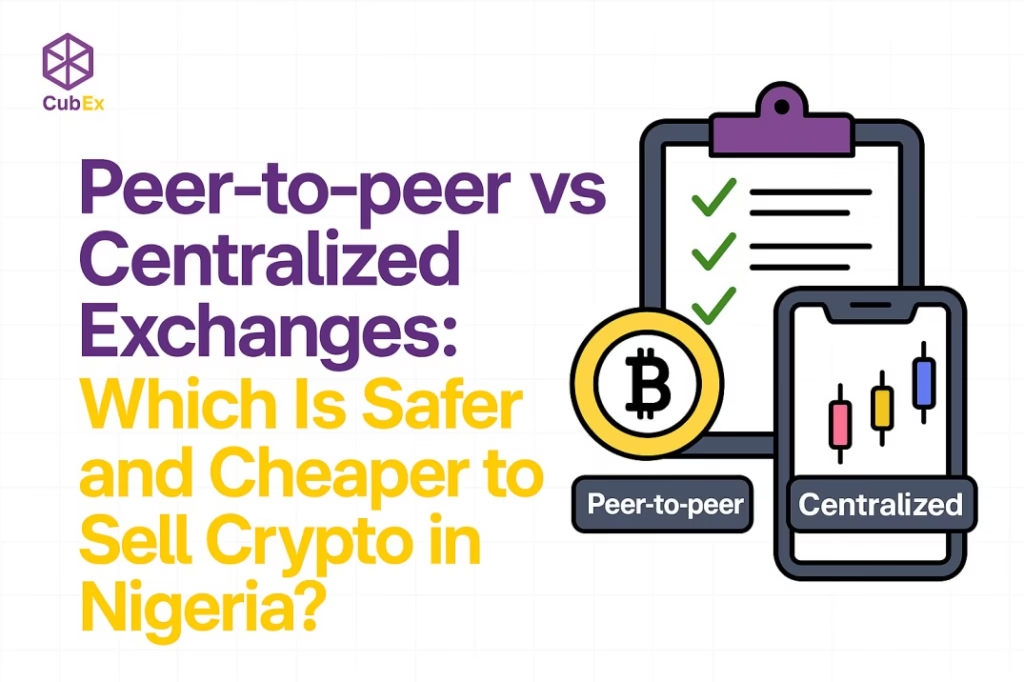
Most Nigerians who trade crypto eventually reach a point where they need to cash out. That moment is where the real confusion starts. Some people swear by P2P because of the rates. Others say centralized exchanges feel safer and easier. The rules in Nigeria have changed a lot in the past few years, and the question keeps coming back to the same two things people really care about. Safety and cost.
In this guide, I will walk you through both options in a way that mirrors how people actually use them. You will see the strengths, the weak points, and how they blend into our banking environment today.
Key Takeaway:
- P2P gives you more flexibility and at times better prices.
- Centralized exchanges give you support and make the whole process feel more predictable..
- The best path depends on what makes you feel safe.
- Your transaction size also helps determine which method works for you.
Related story:How To Safely Avoid Scams and Fraudulent Buyers When Selling Crypto in Nigeria
Related story: Ways to Spot Fake USDT Transactions
The Nigerian Crypto Landscape in 2025
Crypto trading is no longer hiding in the shadows. Nigeria now recognises digital assets under the Investments and Securities Act 2025, which places them under the SEC. This gives a formal base that did not exist a few years ago.
The CBN also reopened the door for licensed exchanges through its VASP guidelines, so banks can now interact with platforms that meet the requirements. That was a major turning point for those who want transparent and traceable transactions.
At the same time, foreign exchanges still face access issues. Some remain partially restricted on local networks. This has encouraged many users to switch to Nigerian platforms and OTC apps that are easier to reach and operate within local rules.
All these changes shape how people choose between P2P and centralized exchanges.
What Is Peer-to-peer in Nigeria
When people say P2P in Nigeria, they usually mean one of three things. Direct trades between strangers, exchange hosted P2P desks, or local OTC apps that behave like P2P but with more structure.
Three common forms of P2P:
- P2P sections inside exchanges
- Local OTC apps set up with a P2P style workflow
- Telegram and WhatsApp groups where people trade by hand
Many Nigerians like P2P because it gives them control. They can choose a buyer, agree on a rate, and complete the transfer in a way that feels personal. The lack of visible fees also attracts people. You see the rate, you take the deal, and that is it.
The issues show up after the excitement fades. Some traders deal with fake alerts. Others meet slow buyers who drag transactions longer than expected. The biggest problem is the risk of running into flagged money, which can lead to a frozen account. These are the parts most people warn each other about privately.
How Centralized Exchanges Work for Cashing Out
Centralized exchanges handle the entire trade for you. You send crypto to your account, choose how you want to cash out, and the platform manages the process.
Common selling options on CEX:
• Spot trading
• Instant-sell OTC
• Exchange hosted P2P
These platforms attract Nigerian users for a simple reason. Everything is structured. You get customer support, clear records, verification, and a predictable flow. That stability matters when people are tired of manual chats and waiting for buyers to respond.
The downsides are there too. Some global exchanges are still blocked on Nigerian networks. Custody risk is another concern, because your crypto sits with the platform until you sell or withdraw. Even with these concerns, many Nigerians prefer the order and speed they get from centralized exchanges.
Safety Comparison: P2P vs Centralized Exchanges
People often choose based on the rate they see, but safety carries more weight in the long run. Here is how both work.
Identity and counterparty safety
P2P trades rely on trust. You deal with someone you do not know, read their reviews, hope they are honest, and watch your screen closely. Centralized exchanges make the process easier to understand. With proper identity checks and records, everything stays organised.
Bank and regulatory safety
P2P transfers in naira have triggered bank flags before. Some users have woken up to frozen accounts because of a chain of unknown previous transactions. Centralized exchanges stay in line with SEC and CBN rules, and that makes banks handle their transactions more easily.
Fraud and dispute handling
P2P disputes rely on screenshots and manual evidence. If a buyer tries something sneaky, the process becomes stressful. Centralized exchanges give you proper dispute systems, tickets, and support staff who can review internal logs.
Accessibility risks
Some foreign exchanges face network blocks. P2P inside those apps becomes harder to reach. Local OTC and Nigerian licensed platforms do not face the same accessibility problems, so users reach them fast.
Cost Comparison
Visible fees
P2P is known for low fees. Some traders pay nothing. Makers may pay a small fee depending on the platform. Centralized exchanges charge clear trading or withdrawal fees, which makes P2P look cheaper at first glance.
Hidden costs
This is where the gap closes.
• Some P2P traders set wide spreads that hide the actual rate.
• Delayed buyers waste your time.
• Fake alerts create losses that overshadow any fee savings.
• Bank charges add up when transfers bounce or get flagged.
These little things usually add a cost that does not appear on the screen.
Who gets the better deal
If you trade small or mid-size amounts, you will often find that centralized exchanges or OTC apps give a more stable experience, even if the raw rate is slightly lower. Bulk traders sometimes prefer P2P because price control matters more to them.
Speed and Convenience: What Most Nigerians Actually Feel
Speed is one of the clearest differences.
P2P speed depends entirely on the buyer. Some pay quickly while others test your patience so cannot totally predict the experience.
Instant-sell OTC options on centralized exchanges work differently. The platform buys from you directly, so settlement happens in minutes. For people who want to cash out fast, this becomes a major deciding factor.
When P2P Makes Sense and When It Does Not
P2P shines when the user knows what they are doing. Experienced traders understand escrow, ratings, and red flags. They know when a buyer is stalling, and they know how to avoid risky accounts.
Beginners usually do not enjoy this learning curve. If you are scared of chargebacks, frozen accounts, or slow buyers, P2P can slow you down.
The biggest warning remains open groups on Telegram and WhatsApp. Those chats offer no escrow and no safety walls. Many of the common scam stories come from those spaces.
When Centralized Exchanges Make More Sense
Centralized exchanges work well for people who want a simple way to handle their transactions. You skip the extra chats, get proper records, and you can cash out without worrying about the buyer changing their mind.
This method works for small to medium amounts and regular monthly withdrawals. If you prefer a process that feels easy to handle with no tension, centralized exchanges are best for you.
Comparison Table
Feature | P2P | Centralized Exchanges |
Safety | Lower | Higher |
Cost | Sometimes cheaper | Clear but predictable |
Speed | Depends on the buyer | Usually faster |
Ease of use | Manual | Smooth and guided |
Fraud risk | Higher | Lower |
Regulatory risk | Higher | Lower |
Access reliability | Depends on platform | Stable for licensed local apps |
Which Is Safer and Cheaper in Nigeria Today?
P2P can be cheaper when everything works smoothly. It gives you more control and sometimes better prices. But it also carries more risk, waiting, and more uncertainty.
Centralized exchanges and local OTC apps offer a calmer experience. They cost a little more sometimes, but they give clean records, strong support, and faster cash outs. For most Nigerians, that stability matters more than squeezing out a few extra naira.
If you are experienced and you enjoy managing risk yourself, P2P still has its place. If you want a safer and predictable path, centralized exchanges is a decision you can trust.
Frequently Asked Questions
Is P2P still safe in Nigeria in 2025?
It depends on the platform and the buyer. It can be safe with escrow, but open groups carry high risk.
Are centralized exchanges allowed in Nigeria?
Yes. Licensed exchanges can operate within SEC and CBN rules.
What is the safest way to sell USDT today?
A licensed centralized exchange or trusted local OTC app offers the safest route for most users.
how-to-swap-crypto-instantly-in-nigeria