- Cryptocurrency
- By Gideon
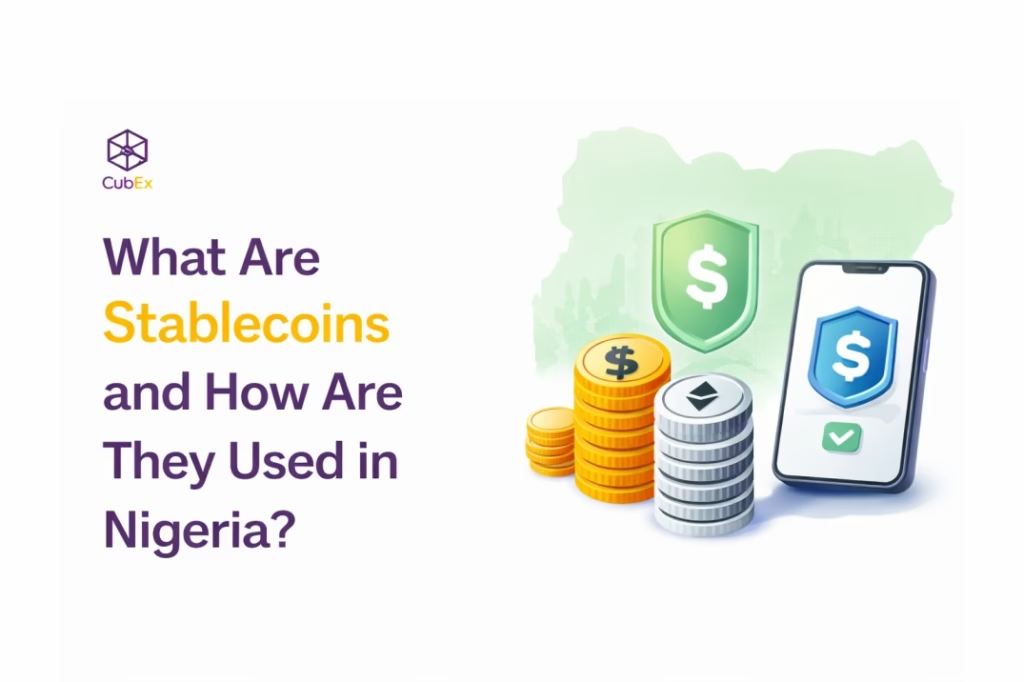
Stablecoins tell a story, not just about crypto but about how people actually move money when prices refuse to sit still. As crypto use spread, it became obvious that not every payment, transfer, or savings decision should depend on what the market is doing that day.
Nigeria’s financial system, shaped by exchange rates, international payments, and access to foreign currency, has pushed people to look for alternatives that work.
Over time, stablecoins became one of those options. People use them to trade with naira, receive money from abroad, pay for services, and keep funds in a form that makes sense for daily use.
This article explains what stablecoins are, how they work, how they are used in Nigeria, and the different types you are likely to come across.
Key Takeaways
- Stablecoins are cryptocurrencies created to stay close to a fixed value
- Most stablecoins are tied to the US dollar
- Nigerians use stablecoins for trading, transfers, online payments, and holding value
- USDT is the most widely used stablecoin in Nigeria
Recommended Read:Top 5 P2P Trading Platforms in Nigeria
What Are the Common Fees for Selling Cryptocurrency in Nigeria?
What Are Stablecoins?
A stablecoin is a type of cryptocurrency that is created to stay close to a fixed value.
Most stablecoins are tied to the US dollar. This means one unit of a stablecoin is meant to represent about one dollar, whether you hold it today or use it later.
Stablecoins are different from cryptocurrencies like Bitcoin or Ethereum. Those coins change in price based on market activity. Stablecoins are created for situations where people want to know what their money is worth at any moment.
People use stablecoins to send money, receive payments, hold value for a period of time, and trade without worrying about price changes while the transaction is happening.
They exist because not every crypto transaction needs price movement attached to it.
How Stablecoins Work
- Stablecoins are linked to a reference value, most often the US dollar
- The system behind a stablecoin tries to keep one unit close to that value at all times
- Some stablecoins are backed by money or similar assets held in reserve
- When new stablecoins are issued, an equivalent amount is expected to back them
- Other stablecoins are backed by cryptocurrencies
- There are also stablecoins that adjust supply
- When demand rises, more coins are released
- When demand drops, supply is reduced
- Most users never see these processes
How Stablecoins Are Used in Nigeria
1. P2P Trading
Many Nigerians use stablecoins for peer-to-peer trading. People buy and sell stablecoins directly with naira and this allows them to move between crypto and cash without price changes affecting the amount during the transaction.
USDT is mostly used because buyers and sellers already treat it as a dollar equivalent. Once the price is agreed, the transaction moves forward based on that value.
2. Sending and Receiving Money
Stablecoins are also used to send and receive money. Within Nigeria, people transfer stablecoins to others for payments, shared expenses, or business transactions. For international transfers, stablecoins make it possible to receive money from outside the country without relying on banks.
Freelancers and remote workers often receive payments in stablecoins. After receiving the funds, they choose when to convert to naira or use the balance for other transactions.
3. Holding Value
Some users keep funds in stablecoins for a period of time. They may not want to hold coins that change in price, and they may not want to convert to cash immediately. Stablecoins give them a way to pause without leaving the crypto space.
This is common among traders waiting for another opportunity or people managing short-term funds.
4. Paying for Goods and Services Online
Stablecoins are used to pay for services that accept crypto. This includes subscriptions, digital tools, and platforms outside Nigeria. When card payments fail or transfers are delayed, stablecoins provide another way to complete payment.
Types of Stablecoins
1. Fiat-Backed Stablecoins
These stablecoins are backed by traditional currencies such as the US dollar.
For each unit issued, an equivalent amount of money or similar assets is expected to exist as backing. This backing is managed by a company or organisation that issues the stablecoin.
Because of this structure, fiat-backed stablecoins are widely used for trading, payments, and transfers. Many people choose them because their value is easy to understand and track. Examples include USDT and USDC.
2. Crypto-Backed Stablecoins
These stablecoins are supported by other cryptocurrencies.
Since crypto prices move, more value is usually locked than the amount of stablecoins issued. This extra backing helps cover price changes when the market shifts.
Crypto-backed stablecoins are managed through smart contracts rather than a single company. This appeals to users who prefer systems that do not rely on one central issuer. DAI is a well-known example.
3. Algorithmic Stablecoins
These stablecoins rely on supply changes to stay close to their intended value.
When demand rises, more units are released. When demand drops, supply is reduced. The goal is to balance price through automated adjustments rather than backing with assets.
This category has seen limited use after past failures. Many users avoid them because price stability depends entirely on the system working as expected.
4. Commodity-Backed Stablecoins
They are usually stablecoins in the form of physical assets such as gold.
Their value is linked to the market price of the asset rather than a currency. This makes them different from dollar-based stablecoins.
People who use them usually want exposure to commodities without holding the physical asset.
Popular Stablecoins Commonly Used in Nigeria
Several stablecoins appear more often in Nigerian trading, payments, and transfers. The names below are the ones users are most likely to come across.
- USDT
Used for P2P trading, transfers, and conversions to naira across multiple platforms. - USDC
Often used for international payments, business transactions, and platforms that specify USDC. - DAI
Used mainly within decentralised finance applications and on-chain transactions. - TUSD
A dollar-backed stablecoin used for trading and transfers on supported platforms. - PYUSD
Linked to PayPal services and used where PayPal-supported crypto payments are accepted. - USDPT
Used on select platforms for trading and transfers, depending on availability.
Stablecoins vs Bitcoin: What’s the Difference?
Price Behaviour
- Bitcoin changes in value based on market activity. The amount you hold today may be worth more or less later.
- Stablecoins are tied to a reference value, usually the US dollar. One unit is expected to represent the same value during use
Purpose
- Bitcoin is often held or traded based on price movement. People use it when they are focused on long-term holding or market timing
- Stablecoins are used when price movement is not needed. They are used for transfers, payments, and holding funds temporarily
Daily Use
- Bitcoin is less commonly used for daily payments although price changes can affect the value during transactions.
- Stablecoins are used for transactions where the amount matters and traders know what they are sending or receiving at the time
Benefits of Using Stablecoins
Price Consistency
Stablecoins are used when people want to know what their money is worth at the point of use. This is important during payments, transfers, and short holding periods.
Because the value is tied to a reference, you can send or receive funds without worrying about sudden changes during the transaction.
Speed of Transfers
Stablecoin transactions move on blockchain networks. This allows money to be sent and received without waiting through long processing times.
This is one reason they are used for both local transfers and international payments.
Ease of Conversion to Cash
In Nigeria, stablecoins can be converted to naira through P2P trading or supported platforms.
This makes it easier for people to move between crypto and cash based on their needs.
Accessibility
Stablecoins can be held and used through mobile wallets and apps. People do not need a bank account to receive or send them. As long as both parties have a wallet, the transaction can happen.
Risks to Know Before Using Stablecoins
Issuer Control and Centralisation
Many stablecoins are managed by companies. These companies can freeze funds or block addresses when required by law or internal policy.
Backing and Reserve Concerns
Some stablecoins are backed by cash or similar assets held by an issuing company.
Traders usually rely on the issuer’s reports to know that the backing exists. If the reserves are mismanaged or unclear, confidence in the stablecoin can drop.
De-Pegging
A stablecoin can move away from its intended value. This can happen during heavy selling, loss of trust in the issuer, or problems within the system supporting the coin. When this happens, the stablecoin may trade above or below its expected price.
Network Fees and Transaction Errors
Stablecoins run on blockchain networks, and each network has its own transaction charges. Sending funds on the wrong network or to the wrong address can lead to permanent loss. These errors cannot be reversed once the transaction is completed.
Things to Know Before Using Stablecoins
- Choose a wallet that supports the stablecoin you want to use
- Confirm the blockchain network before sending funds
- Understand the difference between TRC20, ERC20, and other networks
- Double-check wallet addresses before confirming a transaction
- Be aware of transaction charges on each network
- Know how and where you plan to convert to cash
Frequently Asked Questions About Stablecoins
Are stablecoins legal in Nigeria?
Stablecoins are not illegal in Nigeria. While banks do not directly support crypto transactions, individuals and businesses still use stablecoins through crypto wallets, exchanges, and P2P platforms without restriction.
Is USDT a stablecoin?
Yes. USDT is a stablecoin. It is made to stay close to the value of the US dollar and is one of the most used digital currencies in Nigeria.
Can stablecoins lose value?
Yes, stablecoins can drop below their usual value in certain situations, such as loss of trust in the issuer, market panic, or problems with backing. This does not happen often with major stablecoins, but it is possible.
Which stablecoin do Nigerians use the most?
USDT is the most used stablecoin in Nigeria, especially for P2P trading, transfers, and crypto-to-cash transactions.
Wrapping it Up
Stablecoins have become part of how many Nigerians use crypto today. They offer a way to move money, hold value, and make payments without dealing with constant price swings.
Understanding how stablecoins work, the types available, and how people use them locally helps you make better decisions before getting involved.

Gideon
This is your bio

Best Apps to Withdraw Bitcoin to Naira