- Cryptocurrency
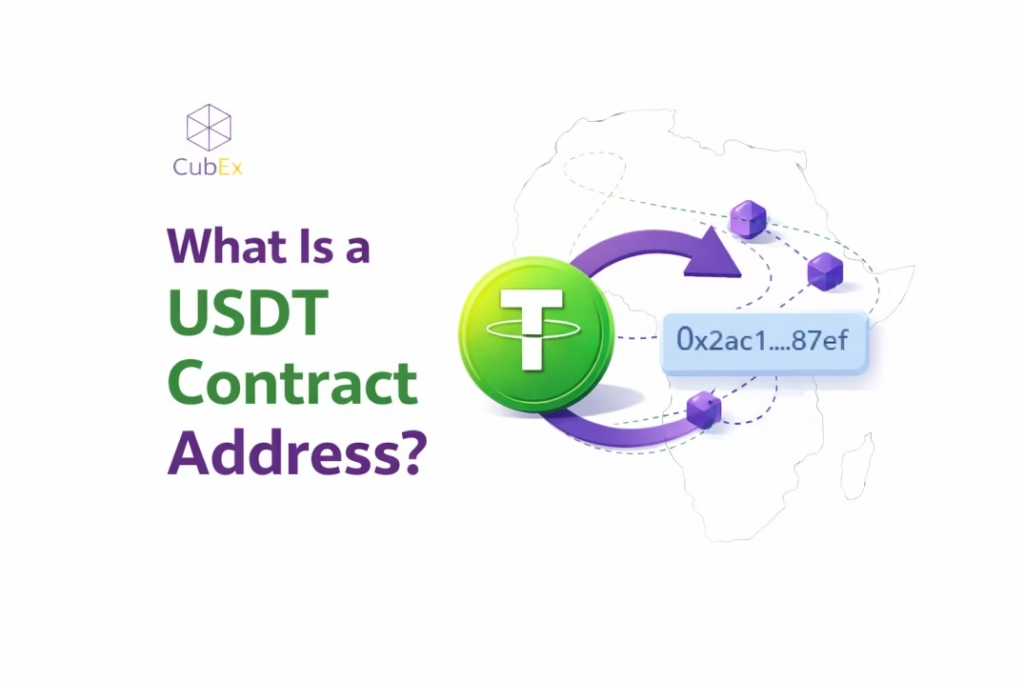
A USDT contract address is the official home address of USDT (Tether) on a blockchain. It tells wallets and exchanges which USDT token is the real one on that network.
- By Gideon
If you’ve ever sent, received, or stored USDT, you may have heard someone mention a USDT contract address. For many people, this sounds technical or confusing. But the truth is, it’s not as difficult as it seems.
Understanding USDT contract addresses can help you avoid scams, protect your money, and make safer crypto transactions. And in today’s world where fake tokens exist, this knowledge is very important.
In this guide you’ll learn:
- What a USDT contract address is
- What is USDT
- How to verify it
- Uses of a USDT contract address
Related story:Differences Tether (USDT) TRC-20 vs ERC -20
What is USDT?
USDT, also known as Tether, is a type of cryptocurrency called a stablecoin. Unlike many cryptocurrencies that rise and fall in price quickly, USDT is coined to stay stable because its value is tied to the US dollar.One USDT is meant to be equal to one US dollar, which makes it feel more predictable and familiar for many people.
This stability is a big reason why people like to use it. It helps them avoid the sudden price swings common in crypto, makes trading easier, allows quick money transfers, and even works as a way to store value digitally. It’s also generally accepted on many exchanges, so it’s easy to move and use. Because of all these benefits, USDT has become one of the most used cryptocurrencies in the world. What many people don’t realize, though, is that USDT doesn’t exist on just one blockchain. It actually runs on several different networks, and each network has its own unique USDT contract address.
What Is a USDT Contract Address?
A USDT contract address is the official identifier that shows where USDT lives on a particular blockchain. Every token on a blockchain has its own unique address that helps the network recognize it and process transactions correctly. For USDT, this address acts like a reference point that tells wallets and exchanges they are dealing with real Tether on that specific network. It also holds the rules that control how the token moves from one wallet to another and how balances are recorded.
Since USDT exists on several blockchains, each network has its own USDT contract address. That means the USDT on Ethereum has a different contract address from the USDT on Tron or BNB Smart Chain, even though they all represent the same value.
Here are a few known examples for learning and recognition:
Ethereum (ERC-20 USDT):
0xdAC17F958D2ee523a2206206994597C13D831ec7
Tron (TRC-20 USDT):
TR7NHqjeKQxGTCi8q8ZY4pL8otSzgjLj6t
BNB Smart Chain (BEP-20 USDT):
0x55d398326f99059fF775485246999027B3197955
These addresses help users and platforms confirm they are interacting with the real USDT on each network. That is why checking the correct contract address is an important safety step in crypto.
Why Does USDT Exist on Multiple Blockchains?
USDT is available on different networks because each blockchain offers different benefits.
Some networks are:
- Faster
- Cheaper
- More popular in certain regions
- Better for DeFi apps
For example:
- Tron USDT is popular because of low fees
- Ethereum USDT is widely used in DeFi
- BNB Smart Chain USDT is fast and affordable
USDT Contract Address vs Wallet Address
Many people who are new to crypto often confuse a USDT contract address with a wallet address because both look like long strings of letters and numbers. Even though they may look similar, they serve very different purposes.
A wallet address is a personal crypto address that belongs to an individual. It is the address used to send and receive funds, just like a bank account number is used to receive money. Every crypto user has their own wallet address, and it represents where their tokens are stored and tracked on the blockchain.
A USDT contract address, on the other hand, does not belong to any person. It belongs to the USDT token itself. It is the official location of the USDT token on a blockchain and helps the network recognize and manage that token. Instead of holding someone’s funds, it holds the code and rules that make USDT work, such as how transfers happen and how balances are updated. While a wallet address shows who owns the tokens, a contract address identifies what the token is.
This difference matters because sending funds requires a wallet address, while a contract address is mainly used for verifying or adding the correct token on a wallet or platform.
Uses of a USDT Contract Address
- Token Verification
A USDT contract address helps confirm that a token is the real USDT and not a fake copy. By matching the contract address with trusted sources, users and platforms can confirm authenticity. - Adding USDT to Wallets
Some wallets require a contract address to manually add USDT as a custom token. Entering the correct address allows the wallet to display the right USDT balance. - Supporting Exchange Listings
Exchanges use contract addresses to list the correct version of USDT on each blockchain. This helps them separate Ethereum USDT from Tron or BNB Smart Chain USDT. - Tracking Transactions on Explorers
Blockchain explorers use the contract address to show transaction history, number of holders, and total supply for USDT on that network. - Powering Smart Contract Interactions
The contract address connects users to the smart contract that controls how USDT transfers, balances, and approvals work on a blockchain. - Preventing Scams and Fake Tokens
Checking the official contract address helps people avoid fake tokens that copy the USDT name or logo but are not real Tether. - Helping Developers and Platforms Integrate USDT
Apps, payment platforms, and DeFi services use the contract address to integrate USDT correctly for payments, swaps, and other features.
How to Verify a USDT Contract Address
- Check Tether’s Official Website
Start by visiting Tether’s official website, since this is the source behind USDT. The site provides information about the blockchains where USDT operates. Look for the network being used, such as Ethereum, Tron, or BNB Smart Chain, and confirm that the contract address matches what is listed there. When an address appears on Tether’s official page, it gives strong reassurance that it is legitimate. - Use Blockchain Explorers
Blockchain explorers allow anyone to view token details and transactions on a network. Examples include Etherscan for Ethereum, BscScan for BNB Smart Chain, TronScan for Tron, and PolygonScan for Polygon. Enter “USDT” or paste the contract address into the search bar. The real USDT usually shows a verified badge, a very high number of holders, and a long record of transactions. These details show that the token is active and recognized on that blockchain. - Confirm on Trusted Crypto Data Platforms
Platforms such as CoinMarketCap and CoinGecko list contract addresses for major tokens, including USDT. Search for USDT on these platforms and check the contract address shown for each network. Even when using these sites, compare the information with another trusted source to be sure everything matches. - Compare Across Sources
After checking one source, compare the address across at least one or two other reliable platforms. When the same contract address appears consistently, it increases confidence that the address is correct.
Following these steps helps ensure that the USDT being used or added to a wallet is the real token and not a fake copy.
Where to Sell USDT
1. crypto exchanges.
These platforms allow users to trade USDT for their local currency and withdraw to a bank account. Popular global exchanges offer liquidity and market rates, but they may include trading fees, withdrawal delays, or strict verification steps before funds can be moved to a bank.
2. peer-to-peer (P2P) marketplaces.
P2P platforms connect buyers and sellers directly. A seller lists USDT for sale, and a buyer sends local currency through bank transfer or other payment methods. While this method offers flexibility and local payment options, it requires careful attention to ratings, proof of payment, and platform escrow systems to reduce risk.
3. crypto broker and swap services
These services allow users to send USDT and receive local currency without active trading. The process is usually straightforward, with rates shown upfront.
How to Sell USDT on Cubex
- Go to google app or app store to download the app
- Create or log in to your Cubex account
- Complete any required verification
- Select Sell USDT on the platform
- Choose the USDT network (TRC20, ERC20, etc.)
- Enter the amount of USDT to sell
- Copy the wallet address Cubex provides
- Send your USDT to that address
- Confirm the transaction
- Receive your Naira in your bank account once confirmed
Frequently Asked Questions (FAQs)
Can one USDT contract address work on all networks?
No. Each blockchain has its own USDT contract address. The USDT on Ethereum is different from the one on Tron or BNB Smart Chain because each lives on a separate network.
Do transactions involving USDT have fees?
Yes. Sending or interacting with USDT requires network fees. The amount depends on the blockchain being used and how busy that network is at the time.
How can the real USDT contract address be confirmed?
The safest way is to check trusted sources such as Tether’s official website or reputable blockchain explorers.
Conclusion
Understanding a USDT contract address adds a layer of awareness when moving money in crypto. It helps with recognizing the real token, avoiding mix-ups, and making safer choices on any network. A little attention to these details goes a long way in protecting funds. With the right information, using USDT becomes more comfortable and secure.
how-to-swap-crypto-instantly-in-nigeria