- Cryptocurrency
- By Gideon
You open your wallet, check your balance, and pause for a moment. The next move isn’t as obvious as it should be. Should you convert your crypto into another coin, or should you cash out entirely?
That hesitation is common.
Many people using crypto today don’t struggle with owning assets, they struggle with deciding what to do next. One option keeps you inside the crypto ecosystem. The other moves your funds into your bank account. Choosing the wrong one can affect speed, fees, and even your overall experience.
Understanding the difference between swapping and selling crypto helps you avoid unnecessary steps, reduce costs, and make decisions that align with what you actually want to achieve.
Recommended Read: How to Store, Sell Crypto and Convert It to Cash in Nigeria
What is Crypto Swap?
Crypto swap is the process of exchanging one cryptocurrency for another without turning it into fiat currency at any point.
For example:
- Converting Bitcoin (BTC) to Ethereum (ETH)
- Swapping USDT for BNB
- Moving from one altcoin to another such as SOL to ADA
In this process, the value stays within digital assets. There is no interaction with a bank account, no deposit into local currency, and no need for cash withdrawal. The transaction remains fully within digital tokens.
Swapping is carried out on crypto platforms, wallets, or decentralized exchanges. A user selects the asset they hold, chooses the asset they want to receive, confirms the transaction, and the new coin is delivered to the wallet address.
The aim of a swap is asset conversion from one coin to another while keeping everything in digital form. It is used when the goal is to change positions between cryptocurrencies without converting to money that can be spent outside crypto.
What Does Selling Crypto Mean?
Selling crypto involves converting cryptocurrency into fiat currency such as Naira, followed by withdrawal into a bank account or receiving payment through an approved method.
For instance:
- Selling Bitcoin and receiving Naira directly into a bank account
- Converting Ethereum into cash for everyday expenses
- Liquidating holdings to access funds in a spendable form
Here, the process ends with money that can be used outside crypto platforms. The asset moves from a digital token into a currency recognized by banks and payment systems.
Selling is used when access to real-world spending is required. It allows funds to be used for bills, transfers, purchases, or savings in a traditional account. Once the conversion is complete, the crypto holdings are no longer part of the user’s wallet balance, since they have been exchanged for fiat currency.
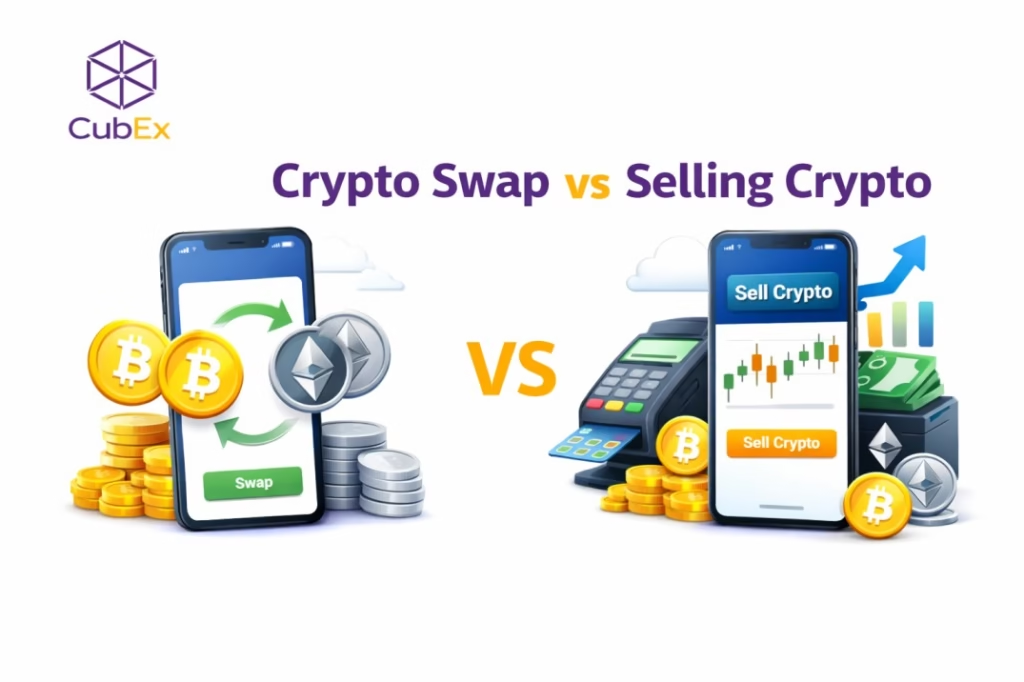
Crypto Swap vs Selling Crypto: Key Differences
Both options involve converting one form of value into another, but they follow different paths and lead to different outcomes. Understanding these differences helps you decide what to do at any point in time.
1. Final Outcome
- Crypto swap keeps your funds in digital assets.
- Selling converts your holdings into fiat currency such as Naira that can be withdrawn to a bank account or used for payments outside crypto platforms.
The end result defines the direction of the transaction. One keeps value within crypto assets, the other moves value into spendable money.
2. Purpose of the Transaction
- Swap is used when adjusting holdings from one coin to another.
- Selling is used when access to cash is required.
Swap supports portfolio movement, while selling supports liquidity for real-world use.
3. Transaction Process
- Swap involves selecting one crypto asset and exchanging it directly for another in a single action.
- Selling may involve placing a sell request, matching with a buyer (depending on the method), confirming payment, and completing a withdrawal to a bank account.
4. Speed of Completion
- Swap transactions are processed quickly, often within seconds or minutes depending on network conditions.
- Selling can take longer, especially when bank transfers, confirmations, or manual approvals are involved.
Processing time depends on the platform, payment method, and verification requirements.
5. Fees and Charges
- Swap may include:
- Price spread between buy and sell rates
- Network or blockchain fees
- Selling may include:
- Platform transaction fees
- Withdrawal fees to bank accounts
- Charges related to payment processing or liquidity
Fee structures differ based on the service used and how the transaction is executed.
6. User Requirement and Access
- Swap usually requires minimal steps and works directly within a platform or wallet.
- Selling may require additional details such as bank account information, identity verification, or payment confirmation depending on the platform.
7. Use Case
- Swap fits situations where the goal is to move between crypto assets without leaving the market.
- Selling fits situations where funds are needed for expenses, savings, or transfers outside crypto platforms.
You may also find this useful: Best Apps for Free Crypto Swap in Nigeria
Comparison Table: Crypto Swap vs Selling Crypto
Feature | Crypto Swap | Selling Crypto |
Final Result | Crypto to crypto | Crypto to fiat (Naira, cash) |
Main Purpose | Adjust or change assets | Withdraw or access money |
Process | Direct exchange in one step | May involve matching, confirmation, and withdrawal |
Speed | Fast, often near instant | Can vary depending on method |
Fees | Spread + network fees | Transaction fees + withdrawal fees |
Bank Involvement | Not required | Required |
Steps Involved | Fewer steps | More steps depending on method |
Use Case | Portfolio movement | Cashout for spending |
When Should You Swap Crypto?
Swapping becomes useful when the goal is to stay within crypto while adjusting the type of assets you hold. It helps move value from one coin to another without converting into cash.
Portfolio Adjustment
A common reason people swap is to rebalance their holdings. For example, someone holding Bitcoin may decide to move into Ethereum based on market direction or personal strategy. Instead of selling Bitcoin into Naira and then buying Ethereum again, a swap allows a direct conversion between the two assets.
Moving Into Stablecoins During Market Fluctuations
Market prices can change quickly. During periods of uncertainty, some users convert their holdings into stablecoins to maintain value. Swapping into a stablecoin helps preserve purchasing power while staying within crypto.
Exploring New Projects
Swapping also supports users who want to try out new tokens. Instead of repeatedly converting to cash and re-entering the market, they can shift part of their holdings into emerging assets directly.
Swapping helps reposition assets without exiting crypto or converting into fiat currency.
When Should You Sell Crypto?
Selling crypto becomes relevant when all you want is to convert digital assets into money that can be used outside crypto platforms.
Accessing Funds in Bank Accounts
One of the main reasons for selling crypto is to withdraw funds into a bank account. This allows users to pay for daily needs, send money, or save in fiat currency.
Locking in Gains
After a period of price increase, some users choose to convert their holdings into cash to secure profits. Selling allows them to move value from fluctuating assets into a more stable form of money.
Making Real-World Payments
Crypto cannot always be used directly for everyday transactions. In situations where payments are required in fiat currency, selling becomes the step that makes the funds usable outside crypto platforms.
Selling converts digital assets into spendable money that can be accessed and used in daily life.
Crypto Swap vs Selling Crypto: Fees, Speed, Convenience, and Risks
Category | Crypto Swap | Selling Crypto |
Fees (Main Charges) | Spread, network fees, slippage | Transaction fees, withdrawal fees, exchange/platform fees |
Hidden Costs | Price variation due to liquidity and timing | Conversion margins, processing charges, platform spreads |
Fee Variation | Depends on liquidity and trading pair | Depends on platform, payment method, and withdrawal channel |
Speed | Usually completed within seconds or minutes | Can be instant or delayed depending on method |
Process | Direct conversion in a single step | May involve matching, confirmation, and bank processing |
Buyer Requirement | Not required | May be required (especially in P2P methods) |
Convenience | Simple, fewer steps | More steps depending on method used |
Price Risk | Slippage and spread differences | Price changes during processing or delays |
Counterparty Risk | Minimal on most platforms | Present in P2P transactions |
Platform Reliability | Depends on liquidity and system performance | Depends on platform trust and payment processing |
Related: 15 Best Crypto Apps in Nigeria (to Sell & Convert Safely)
Frequently Asked Questions
Can I swap crypto directly to Naira?
No. Crypto swap only allows conversion from one cryptocurrency to another. To get Naira, the asset must first be sold or converted through a supported cashout method.
Do I need a bank account to swap crypto?
No. Crypto swap does not involve fiat currency, so a bank account is not required. The transaction stays within crypto assets.
What happens if I choose the wrong coin during a swap?
Most platforms will not allow reversal once a swap is confirmed. It’s important to double-check the selected assets before completing the transaction.
Can I reverse a crypto swap after confirming it?
No. Once a swap is completed on the blockchain or platform, it cannot be reversed. Transactions are final after confirmation.
Conclusion
Crypto swap and selling crypto serve different purposes, even though both involve converting assets.
Swapping allows movement between cryptocurrencies without leaving the ecosystem. Selling converts crypto into cash that can be used in everyday life. The decision between the two depends on what you intend to do with your funds.
When staying within crypto and adjusting holdings, swapping is often the path to take. When you need to access money outside crypto, selling becomes the necessary step.
With platforms that support both options, users gain the flexibility to act based on their needs at any time.
how-to-swap-crypto-instantly-in-nigeria