
- Cryptocurrency
- By Gideon
Crypto pricing in Nigeria does not behave exactly the same way it does in more stable markets. Anyone who has traded Bitcoin or USDT locally will notice that rates often differ from one platform to another, and they can shift within a short period of time.
This variation is not random. The Nigerian crypto market has developed its own structure shaped by a mix of global market movements and local economic conditions. Exchange rate pressure, trading demand, liquidity differences, and the way P2P transactions are carried out all play a role in how prices are formed at any given moment.
For people who buy or sell crypto in Nigeria, these movements explain why rates fluctuate, why platforms don’t always show the same figures, and why timing can affect the value received when converting crypto to naira.
Recommended Read: How to Track Crypto Prices and Transactions
Key Takeaways
- Crypto rates in Nigeria are not fixed and can differ across platforms at the same time.
- Price movements are influenced by both global market trends and local economic conditions.
- Exchange rate pressure between the Naira and the US Dollar plays a major role in how crypto is priced locally.
- Trading demand and liquidity levels across platforms can cause noticeable differences in rates.
- P2P trading activity contributes to how prices are formed in the Nigerian market.
- Timing and platform choice can affect the value received when converting crypto to naira.
What Determines Crypto Prices in Nigeria?
Crypto pricing in Nigeria is determined by a mix of global and local market forces rather than a single fixed rate. The value you see when buying or selling Bitcoin, Ethereum, or USDT is usually the result of how these elements interact at a given time.
Global market price (BTC, ETH, USDT):
The starting point for any crypto price is the global value of the asset. If Bitcoin rises or falls internationally, Nigerian prices adjust in the same direction.
Naira exchange rate influence:
Since most crypto is priced in USD, the strength or weakness of the Naira against the dollar directly affects how much crypto costs in Nigeria.
P2P market dynamics:
In Nigeria, a large portion of trading happens through peer-to-peer platforms. Prices here are set by buyers and sellers, which means rates can differ based on demand, availability, and urgency of trade.
These elements combine to form the final rate seen on exchanges and P2P platforms, setting the stage for the key factors that influence how crypto prices move in the Nigerian market.
Recommended Read: Top 5 P2P Trading Platforms in Nigeria
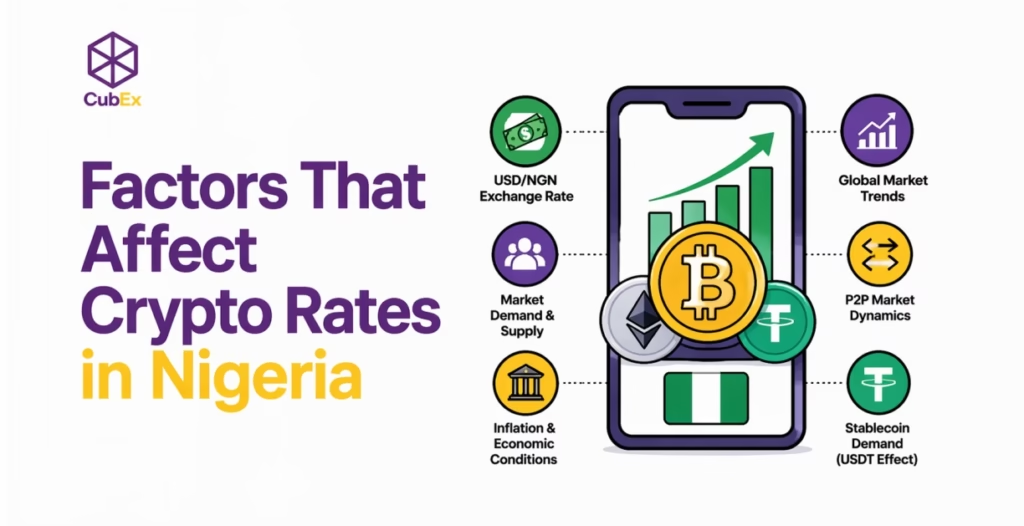
Factors That Affect Crypto Rates in Nigeria
1. Supply and Demand in the Nigerian Market
Crypto pricing in Nigeria is heavily influenced by how many people are willing to buy or sell at a given time. Unlike centralized markets with fixed pricing systems, local crypto rates are influenced by active market participation at every moment.
When demand for assets like USDT and Bitcoin increases, especially during periods of currency pressure or high trading activity, prices tend to rise because more buyers are competing for limited supply. On the other hand, when more sellers enter the market than buyers, rates can drop as platforms and traders adjust to absorb the excess supply.
A major driver of this demand comes from how crypto is used in Nigeria. Many individuals hold digital assets as a way to protect value against inflation, while others use it for savings or to receive international payments and remittances. These use cases create steady and sometimes urgent demand in the market.
Because of this constant movement, sellers do not always receive the same rate. At times of strong demand, selling prices can improve. When demand slows or supply increases, sellers may have to accept lower rates depending on market pressure at that moment.
2. USD to Naira Exchange Rate (FX Influence)
The exchange rate between the US Dollar and the Naira is one of the strongest forces behind crypto pricing in Nigeria. Since most cryptocurrencies are valued globally in USD, any movement in the dollar-to-naira rate is quickly reflected in local crypto prices.
When the Naira weakens against the dollar, the naira value of crypto increases automatically. This is why assets like USDT and Bitcoin often appear more expensive in Nigeria compared to global averages. On the other hand, when the Naira strengthens, crypto prices in naira terms tend to adjust downward.
This link between crypto and foreign exchange means that traders are not only watching crypto charts but also tracking dollar movements closely. FX pressure alone can explain sudden changes in local crypto rates even when global crypto prices remain stable.
3. Global Crypto Market Movements
Crypto prices in Nigeria are also influenced by movements in the global market. Since assets like Bitcoin, Ethereum, and other major cryptocurrencies are traded internationally, their prices are set first on global exchanges before local markets adjust.
When Bitcoin rises or falls globally, Nigerian prices follow the same direction. This happens because local exchanges and P2P traders reference international market rates when setting their own prices.
Market-wide events such as major price rallies, crashes, or shifts in investor sentiment also affect how crypto is priced locally. A strong bullish or bearish trend in the global market is usually reflected quickly in Nigeria’s crypto rates, regardless of local conditions.
4. Liquidity and Trading Volume on Exchanges
Liquidity refers to how easily crypto can be bought or sold without causing a major change in price. In Nigeria, liquidity levels differ from one platform to another, and this directly affects the rates users see.
On platforms with high trading activity, there are more buyers and sellers available at any time. This helps keep prices more stable and closer to global rates. On the other hand, platforms with lower liquidity may show slightly higher or lower prices because fewer participants are setting the market pace.
Trading volume also plays a role. When activity is high, prices adjust quickly and reflect real market demand. When volume drops, price differences between platforms become more noticeable, especially during large buy or sell orders.
5. Stablecoin Demand (USDT Effect in Nigeria)
Stablecoins, especially USDT (Tether), play a major role in how crypto is priced in Nigeria. USDT is used as a digital version of the US dollar, making it a preferred choice for saving value and trading across platforms.
High demand for USDT shapes its activity in the Nigerian market, and its price can differ slightly from the official dollar rate. Traders use it as a reference point when moving between crypto and cash, which makes it central to most P2P transactions.
When demand for USDT increases, its naira value tends to rise due to competition among buyers. When demand slows, prices adjust based on available supply across exchanges and peer-to-peer markets.
6. Government Policies and P2P Market Structure
Government policies have played a major role in shaping how crypto is traded in Nigeria. Restrictions placed on direct crypto services in the past pushed a large part of trading activity into peer-to-peer (P2P) markets, where users trade directly with each other instead of through centralized systems.
This shift means that prices are now largely determined by market participants rather than a single controlling exchange. Buyers and sellers set their own rates based on demand, urgency, and available liquidity at the time of trade.
The structure of P2P trading also creates room for price differences across platforms. Since transactions depend on individual agreements, rates can vary depending on who is buying, who is selling, and how active the market is at that moment.
Why Crypto Rates Differ Between Platforms
1. Different pricing systems (Binance vs P2P vs local exchanges)
Different platforms do not use the same pricing method.
On Binance, prices are usually close to the global market rate because trading is automated and highly liquid.
On P2P platforms, prices are set by individual buyers and sellers. This means someone can list Bitcoin or USDT at a higher or lower rate depending on demand at that moment.
Local exchanges also set their own rates based on available liquidity, operating costs, and how quickly they need to complete trades. This is why the same crypto can show different prices across platforms at the same time.
2. Arbitrage trading activity
Sometimes the price of crypto is slightly cheaper on one platform and higher on another. Traders take advantage of this difference by buying where it is cheaper and selling where it is higher.
This activity is called arbitrage. It helps reduce price gaps over time, but small differences still appear because prices change quickly and not all platforms update at the same speed.
3. Buyer vs seller pricing behavior
Buyers and sellers do not look at the market the same way.
- Sellers want the highest possible rate when converting crypto to cash
- Buyers want the lowest possible price when purchasing crypto
Because of this, each side posts different rates on P2P platforms. Add factors like urgency, payment method, and market demand, and the final price each person sees can differ slightly even for the same asset.
How to Get the Best Crypto Rates in Nigeria
Getting a better crypto rate in Nigeria is mostly about timing, platform choice, and how the trade is executed and small decisions can affect the value received when buying or selling.
1. Compare rates across multiple platforms
Crypto rates are not the same everywhere. Checking more than one platform before trading helps you see where the price is higher or lower at that moment.
2. Trade during active market periods
Rates tend to move faster when trading activity is high. During these periods, price gaps between platforms reduce slightly, which can improve execution rates.
3. Use high-liquidity platforms
Platforms with more active buyers and sellers usually offer more stable pricing. Low-liquidity platforms may show wider price differences and slower trade matching.
4. Watch USD/NGN movements
Since most crypto pricing is tied to the dollar, changes in the Naira exchange rate can affect how much crypto is worth locally. Tracking this helps with better timing.
5. Avoid rushed transactions
Urgent trades often lead to accepting less favorable rates. Taking time to compare offers usually results in better value.
6. Check P2P order books carefully
On P2P platforms, prices are set by users. Reviewing multiple listings before choosing a trade helps avoid lower-than-average rates.
You may also like this: Best Crypto Apps in Nigeria 2026
Frequently Asked Questions
Why is crypto more expensive in Nigeria?
Crypto is often more expensive in Nigeria because prices are influenced by the USD/NGN exchange rate, high local demand, and P2P trading activity. Since most crypto is priced globally in dollars, a weaker Naira increases the local cost of buying digital assets.
Why does USDT rate change daily?
USDT rate changes because it is closely tied to dollar demand in the Nigerian market. When more people are buying USDT for trading or saving value, the price increases. When demand drops, the rate adjusts based on available supply on exchanges and P2P platforms.
What affects Bitcoin price in Nigeria?
Bitcoin price in Nigeria is influenced by global market movements, local demand, exchange rate fluctuations, and liquidity on trading platforms. Even when global prices stay stable, local conditions can cause differences in the naira value.
Is crypto price the same everywhere?
No, crypto prices are not the same everywhere. Different platforms use different pricing systems, liquidity levels, and trading structures. This is why Binance, P2P markets, and local exchanges often show slightly different rates at the same time.
Why do P2P rates differ from Binance?
P2P rates differ from Binance because Binance reflects more global market pricing, while P2P prices are set directly by buyers and sellers. Factors like demand, urgency, payment methods, and liquidity cause variations in P2P rates.
Litecoin vs Bitcoin Transactions in Nigeria