- Cryptocurrency
- By Gideon
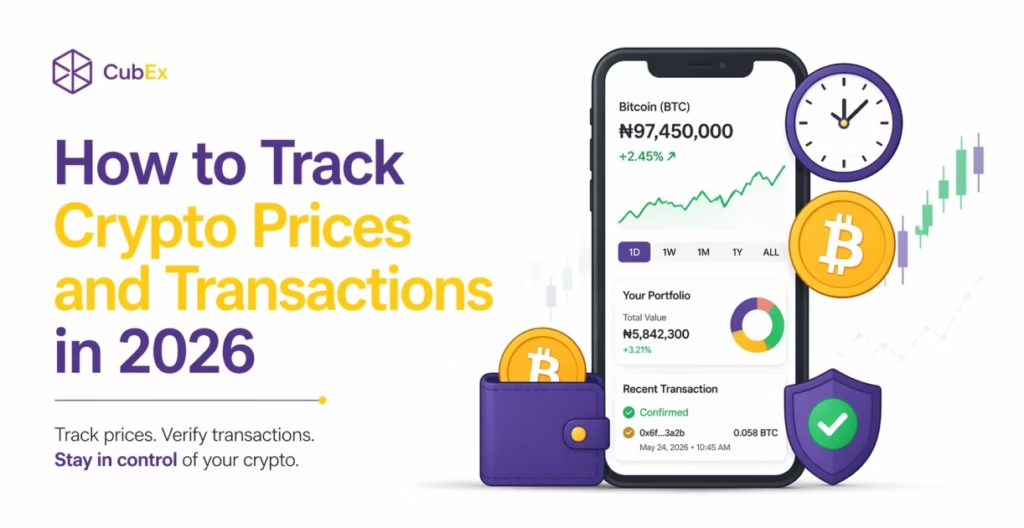
Tracking crypto prices and transactions has become more complex as the market expands across multiple exchanges, wallets, and blockchain networks. Instead of relying on a single source, prices are now pulled from different platforms, while transaction updates depend on network confirmation speed and how each system processes data.
As a result, the same asset may appear slightly different depending on where you check it, whether on a trading app, a portfolio tracker, or a blockchain explorer. These variations are completely normal and usually happen because of liquidity differences, network delays, and how platforms aggregate market data.
Once you understand how these systems connect, it becomes much easier to follow both price movements and transaction status. In this guide, you’ll learn how crypto prices are tracked and how transactions are verified across blockchain networks in 2026
Also check out: Best Apps to Withdraw Bitcoin to Naira
Key Takeaways
- Crypto prices are not fixed; they vary across exchanges, wallets, and tracking platforms because each one pulls data from different market sources.
- Price differences are usually caused by liquidity levels, trading volume, and how quickly each platform updates its data.
- Crypto transactions are recorded on the blockchain, but their visibility depends on network confirmation speed and congestion.
- A single crypto transfer can appear differently across apps depending on its status as pending or confirmed on-chain.
- Blockchain explorers are the most reliable way to verify transaction status, wallet activity, and transfer details.
Understanding How Crypto Price Tracking Works in 2026
Crypto prices do not come from a single source. Instead, they are created across multiple exchanges where buying and selling happen continuously.
On each exchange, prices change in real time based on demand, supply, and available liquidity. Meanwhile, price tracking platforms collect data from several exchanges and combine it to show an average market value.
Because of this, differences in prices across platforms are completely normal. In most cases, these variations are influenced by liquidity levels, trading volume, and how quickly each platform updates its data.
For example, larger exchanges often display more stable prices due to higher trading activity. Smaller platforms, on the other hand, may show slight fluctuations.
Since crypto markets operate 24/7, prices continue to change constantly based on global activity across different regions and time zones.
Best Ways to Track Crypto Prices in 2026
Crypto Price Aggregator Platforms
- Collect price data from multiple exchanges and display an average market value
- Show key metrics like market cap, trading volume, and price changes
- Used for quick overview of multiple coins in one place
Exchange Platforms
- Display live trading prices based on active buy and sell orders
- Reflect the most direct market price of an asset at the point of trade
- Useful for users actively buying or selling crypto
Portfolio Tracking Apps
- Sync multiple wallets and exchanges in one dashboard
- Show total asset value, profit/loss, and performance over time
- Support tracking across different coins and blockchains
Price Alert Tools
- Allow users to set custom price levels for notifications
- Send alerts when a coin rises or drops to a specific value
- Help users react quickly to market movements
How to Track Crypto Transactions Step-by-Step
Step 1: Get the Transaction ID (TX Hash)
- Every crypto transfer comes with a unique transaction ID (TX hash)
- This ID is generated immediately after sending funds from a wallet or exchange
- It serves as the reference point for tracking the transaction on the blockchain
Step 2: Open a Blockchain Explorer
- A blockchain explorer is a tool used to view transaction data on a specific network
- Different networks have different explorers (for Bitcoin, Ethereum, and others)
- The TX hash is pasted into the search bar to pull up transaction details
Step 3: Check the Transaction Status
- Transactions are displayed with a status label
- Statuses include pending, confirmed, or failed
- Confirmation means the transaction has been validated and added to the blockchain.
Step 4: Review Transaction Details
- Displays sender and receiver wallet addresses
- Shows amount transferred and network fees
- Includes timestamp and number of confirmations
- Confirms if the funds successfully reached the destination wallet
Why Your Crypto Transaction Might Not Show Immediately
Network Congestion Delays
- High traffic periods can slow down transaction processing
- Transactions queue up in the mempool before confirmation
- The higher the network activity, the longer it may take to appear on-chain.
Low Gas Fees or Transaction Priority Issues
- Miners and validators prioritize transactions with higher fees
- Low gas fees can push a transaction lower in the processing queue
- This directly affects how fast a transaction gets confirmed.
Wrong Network Selection
- Sending crypto on the wrong blockchain network can prevent proper processing
- Funds may not appear in the expected wallet if the networks do not match
- This can result in missing or delayed transactions until the correct network is selected.
You may also find this useful: Best Crypto Apps in Nigeria 2026
Best Tools to Track Crypto Prices and Transactions in 2026
Price Tracking Tools
- Crypto price aggregators that display average market values across multiple exchanges
- Trading dashboards that show live charts, volume, and market movements
- Mobile apps that provide quick access to price updates and portfolio snapshots
Blockchain Explorers
- Tools used to track and verify transactions on specific blockchain networks
- Allow users to search with a transaction ID (TX hash) to view full transfer details
- Show wallet activity, confirmations, fees, and transaction status
Portfolio Management Tools
- Platforms that combine multiple wallets and exchange accounts into one view
- Track overall portfolio value, profit/loss, and asset distribution
- Provide performance analytics to monitor gains and losses over time
- Include reporting features for transaction history and tax purposes
Crypto Price Tracking vs Transaction Tracking (Key Difference)
Aspect | Price Tracking | Transaction Tracking |
What it shows | Market value of crypto assets | Movement of crypto between wallets |
Main purpose | Monitor asset value and market performance | Verify transfers on the blockchain |
Data source | Exchanges and price aggregators | Blockchain explorers |
Key focus | Live trading price and portfolio value | Transaction status and wallet activity |
Output | Price charts, market updates, portfolio valuation | TX hash details, confirmations, wallet addresses |
Common Mistakes People Make When Tracking Crypto
Relying on a Single App for Price Data
- Different platforms show slightly different prices
- Leads to inaccurate assumptions about market value
- Limits overall visibility of true market movement
Ignoring Blockchain Explorers
- Wallet apps alone do not show full transaction details
- Blockchain explorers provide the most reliable on-chain data
- Skipping them makes verification incomplete
Misreading Pending Transactions
- Transactions can remain unconfirmed for a period
- This delay is part of normal network processing
- It does not indicate loss of funds or failure
Confusing Wallet Balance with On-Chain Status
- Exchange balances may update before or after blockchain confirmation
- On-chain status reflects actual network confirmation, not app display timing
- Differences between both can create misunderstanding of transaction state
See also: Best Time to Sell Bitcoin in Nigeria
How to Track Your Crypto Prices
Daily Price Monitoring Setup
- Choose a reliable crypto price aggregator for consistent market updates
- Enable price alerts to track major movements without constant checking
- Set up portfolio tracking to monitor all assets in one place
Transaction Verification Routine
- Always save the transaction ID (TX hash) after sending crypto
- Use a blockchain explorer to confirm transaction status
- Check details before reacting to delays or missing updates
Portfolio Health Check System
- Review profit and loss on a weekly basis
- Track how assets are distributed across different coins
- Monitor overall portfolio performance over time.
Future of Crypto Tracking in 2026 and Beyond
AI-Powered Portfolio Tracking
- Predictive insights that help users understand possible market movements
- Smart alerts that adjust based on user behavior and market conditions
- Automated tracking that reduces manual monitoring of assets
Unified Wallet Dashboards
- Cross-chain tracking across multiple blockchain networks in one interface
- Multi-wallet aggregation for a complete view of all holdings
- Simplified dashboards that combine assets, performance, and transactions
Real-Time On-Chain Analytics
- Advanced tools that provide deeper visibility into blockchain activity
- Institutional-grade transparency for transaction flow and market behavior
- Detailed tracking of wallet movements, liquidity shifts, and network activity
Frequently Asked Questions on Tracking Crypto Prices and Transactions
Why do crypto prices differ across apps?
Crypto prices differ because each platform pulls data from different exchanges. Variations in liquidity, trading volume, and update speed also affect the final price shown.
What is the most reliable way to track crypto transactions?
The most reliable method is using a blockchain explorer. It shows the exact status of a transaction using the transaction ID (TX hash), including confirmations and wallet details.
Why is my crypto transaction still pending?
A transaction may remain pending due to network congestion or low transaction fees. It stays in the mempool until validators or miners process it.
Can I track crypto without a wallet app?
Yes. Prices can be tracked using aggregators or exchanges, and transactions can be verified directly on blockchain explorers using the TX hash.
What is the difference between a crypto tracker and a blockchain explorer?
A crypto tracker shows price and portfolio value, while a blockchain explorer shows transaction history and on-chain activity.
Conclusion
Tracking crypto prices and transactions in 2026 comes down to how different systems work together rather than relying on one source of information. Prices are shaped by multiple exchanges, while transaction updates depend on blockchain confirmation and network activity.
When these parts are understood, it becomes easier to interpret what is happening across wallets, exchanges, and tracking tools without misreading delays or price differences. The process stays consistent; check price data from aggregators or exchanges, and verify transactions through blockchain explorers when needed.
This approach helps when following crypto activity and reduces confusion around market movements or transaction delays.
Litecoin vs Bitcoin Transactions in Nigeria